|
 |
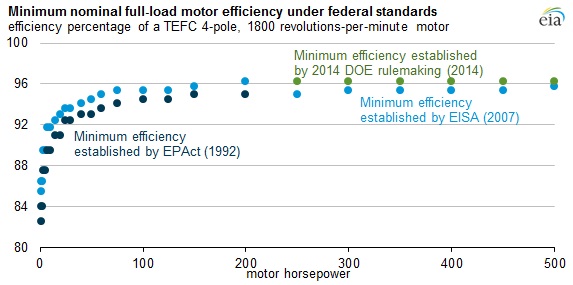
Bureaucrats claim electric motors get 96% efficiency. It's total fraud. No transformation of electrical energy into kinetic energy can get more that 40% efficiency at normal temperatures; and it is 25% efficiency or less under operating conditions. That means 60-75% energy loss in electric motors.
And then the fraud was converted to social policy claiming that electric vehicles get 100 to 150 miles per gallon equivalent for that reason. Correct that error and add the remaining electrical loss from start to finish, and electric vehicles get 5-10 miles per gallon equivalent. Who needs rationality and scientific standards, when fraud works so good? But try paying for the trash. The rare metals are used up already.
Claimed 96% Efficiency Anyone who thinks electric motors get 96% efficiency isn't qualified to clean a doghouse. When bureaucrats promote such garbage it shows how incompetent and corrupt they are—corrupt, because they aren't allowing anyone to correct the errors. The bureaucrats don't know the difference between inductance and resistance. Why didn't the engineers correct the error? Probably because there are no engineers doing hands-on work any more. Computer programs now design for engineers, which means getting everything wrong.
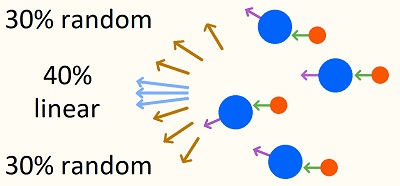
The maximum efficiency for an electric motor is 40% (60% heat) under ideal conditions of speed and torque. With variations in speed and torque, the efficiency drops to an average of 25% (75% heat). Government bureaucrats require 96% efficiency for electric motors, by law. Anything near 100% efficiency for mechanical energy is laughable. It shows what a disconnect from reality has been occurring over recent decades. Why do you suppose fans are incorporated into electric motors? Not for 96% efficiency. A fan would not be needed at 96% efficiency. When do you supposed such high efficiency was produced? No major breakthroughs in technology occurred. Laws have been created which require a particular method of calculation for determining efficiency of motors. Such strict requirements guaranty that everyone gets the same result. Otherwise, a wide variety of methods of calculation could be used due to infinite contrivance in energy relationships. The Curve When they show a curve that correlates with size of motors, they are looking at voltage, which is the only factor that correlates with size. Voltage is only relevant to the resistive portion of the load. The resistive load is only about 5% of the energy in an electric motor. They don't understand what an energy transformation is. If they were struggling with a difficult problem, you could bleed for them. When they destroy global economies over their stupidity, they are screwed up. Engineers had these problems figured out at one time, which was between about 1850 and the 21st century. To not now have it figured out is the equivalent of overthrowing the rational world. The Physics Heat is randomized atomic motion. Kinetic energy is linearized atomic motion. Everything electrical energy does results in atomic motion being more randomized instead of less, which means heat increases. For that reason, no electrical energy transformation can save much more than 40% of the energy as linear motion of kinetic energy. The maximum efficiency for electric motors has been recognized as 40% until recent contrivances claimed an increase. Now, quack numbers are being used to get 96% efficiency in electrifying transportation. These claims appear to be the source of the conflict with reality in the minds of persons who promote the renewable energy and electric vehicle causes. They apparently assume that electric motors get 96% efficiency and always have. Electric motors have cooling fans to remove heat, because they never get more than 40% efficiency, and usually a lot less. What fakes are doing now days is contriving numbers for the relationship between one form of energy and another, since the misdefinition of kinetic energy does not stabilize the relationships. A wide variety of numbers have been concocted for every purpose due to the muddle resulting from the misdefinition of energy. Inductive force does not act upon copper metal, unless it has current flowing through it, which indicates that the inductive force only acts upon the linearized electrons rather than the orbiting electrons.
Years ago, engineers would measure heat produced by motors. The heat would always be 60% or more of the added electrical energy. If anyone were to pull out the false equations resulting from the misdefinition of energy, they would have to explain where the discrepancy came from, so it never happened. Now days, no one measures heat directly: they calculate only. So frauds can now rely upon erroneous equations with no one contradicting them. Zirconium Tritelluride A monocrystal of zirconium tritelluride shows the physics. It transfers 50 times more amperage than copper due to a lack of complex crystal structures which scatter electrons. Scattered electrons produce the heat of electrical wires, as the electrons collide with metal atoms. Resistance creates heat in electronics. Electrical resistance is caused by electrons striking atoms, and heat is the result. The amount of current that can flow through a wire is determined by resistance. Therefore, a factor of 50 increase in flow of electrons (amperage) means a reduction by a factor of 50 in resistance. Ohm's law states this relationship. It says amps equal volts divided by resistance. Amps and resistance are inversely proportional. Researcher's quote: "Conventional metals are polycrystalline. They have grain boundaries and surface roughness, which scatter electrons," Balandin said. "Quasi-one-dimensional materials such as ZrTe3 consist of single-crystal atomic chains in one direction. They do not have grain boundaries and often have atomically smooth surfaces after exfoliation. We attributed the exceptionally high current density in ZrTe3 to the single-crystal nature of quasi-1D materials." Science Daily Link:
https://www.sciencedaily.com/ Reference: A. Geremew, M. A. Bloodgood, E. Aytan, B. W. K. Woo, S. R. Corber, G. Liu, K. Bozhilov, T. T. Salguero, S. Rumyantsev, M. P. Rao, A. A. Balandin. Current Carrying Capacity of Quasi-1D ZrTe3 van der Waals Nanoribbons. IEEE Electron Device Letters, 2018; 1 DOI: 10.1109/LED.2018.2820140
|
 |
|
||||||||||||||||||||
 |
 |
 | ||
 | ||||
 |
 |
 |
 |
|||